Written by: Lindsay Johns [read Bio]
Prior to the investiture of President Dr. Mark Brown, I had never visited Tuskegee University - one of the nation’s most historic, illustrious and revered HBCUs. Moreover, prior to this visit, I had never heard people speak in such hushed, reverential and quasi-religious tones about a seat of learning, however prestigious or venerable. Having gone to Oxford, I am accustomed to hearing people rhapsodize with a sense of indebtedness about their hallowed
alma mater, but never with such fulsome veneration as I heard on that September day in Alabama.
Be it Tuskegee’s indomitable first President Booker T. Washington - a man famously born into slavery yet who was so determined to get an education that he walked five hundred miles to Hampton in Virginia to slake his insatiable thirst for knowledge, scientist and agronomist George Washington Carver, the fearless heroism of the Tuskegee Airmen in World War Two, novelist Ralph Ellison or chart-topping musician Lionel Ritchie, its esteemed leaders, teachers and alumni have bestridden the world like colossuses and their outstanding achievements in myriad fields of human endeavor have only served to burnish its reputation as a pre-eminent academic institution.
In fact, given its quasi-mythical status in the pantheon of HBCUs, the pronunciation of Tuskegee - those three dulcet syllables which glide off the tongue - seems to have a kind of transcendent spiritual connotation when uttered aloud, and the countless invocations of “Mother Tuskegee” in many of the ceremony’s speeches - articulated each time with consummate filial piety - allude to her magnificently maternal, nurturing embrace and the preternaturally strong umbilical bond between the university and her students.
Having read both Washington’s autobiography Up From Slavery (1901) and Ellison’s novel Invisible Man (1952) - canonical literary touchstones which are intimately connected with their authors’ time at Tuskegee, I thought I was ready for my visit. Yet little actually prepares you for the reality of arrival, driving down Booker T. Washington Boulevard and beholding the pristine campus designed by the first accredited African-American architect - the much vaunted milieu finally manifest in sunlight and stone.
Founded in 1881 by former slave Louis Adams, the university’s 144 year history is now the stuff of African-American folk legend - from its establishment during the time of egregious racial injustice and abject disenfranchisement, with Washington and his students making the bricks with their own hands which they then used to build the classrooms, to it becoming a world class university in a multiplicity of specialist domains.
With its Latin motto “Scientia principatus opera” translating as “Knowledge, Leadership, Service”, Tuskegee doubtless owes its “hand, heart and head” educational philosophy to Washington, but its all-encompassing pedagogical mission now far exceeds even the holistic vision of its first leader.
As the academic procession entered the hall to a march by Mendelssohn, the assembled dignitaries rose, visibly excited as the investiture officially commenced. Like an Oxford Encaenia ceremony transposed to the Deep South, but with more color and swagger, and with the Tuskegee faculty in full regalia, complete with tasseled caps and gowns, unabashed pomp, circumstance and a profuse respect for tradition all played their rightful part. Be it the Presidential Medallion and the University Mace, I witnessed a felicitous synthesis of two tenacious traditions - medieval European and contemporary African-American.
After a joyful, melodious rendition of the national anthem by the Tuskegee Golden Voices choir, resplendent in their crimson and gold robes, and a choral response to the invocation, various salutations were given to the President, lauding him as a distinguished alumnus and decorated veteran with “an unshakable commitment to service”, who, as “a son of Mother Tuskegee” carrying within him "the DNA of Tuskegee excellence”, had answered the call to lead at this pivotal time.
Perhaps most worthy of note, given that UNCF was actually founded in 1944 by Dr. Frederick Douglass Patterson, the third President of Tuskegee, was the barnstorming address by UNCF’s current President and CEO, Dr. Michael Lomax.
Majestically commanding the auditorium with his flamboyantly energetic delivery, part Shakespearean, part demotic, and with the timbre of his voice belying his emotion, Dr. Lomax began by sharing his own, deeply personal connection to Tuskegee. As he explained how this for him was in fact a “coming home ceremony,” since it was Tuskegee which had afforded his family both sanctuary and succor 64 years ago when his mother Almena, a trail-blazing journalist covering the Civil Rights bus boycotts, had journeyed 2,600 miles from Los Angeles to Alabama by Greyhound, accompanied by her six children, the audience murmured with admiration and empathy.
Sharing his recollections of arriving on the Tuskegee campus on a cold January morning in 1961, being billeted in Dorothy Hall and eating a meal of grits, Dr. Lomax’s seamless fusion of his own family history with that of Tuskegee’s wider mission was profoundly moving and poignantly illustrated the effects kindness can have on the human psyche, even many years later. In a voice pregnant with gratitude, he said that it was at Tuskegee that he first learnt that “HBCUs mean warmth, nourishment, love and embrace.”
Addressing the strong bond which to this day exists between UNCF and Tuskegee, he articulated why UNCF is both a partner and an investor in Tuskegee’s future and, to cheers, outlined the munificent monetary gift he was bearing from his organization.
Another highlight of the ceremony was the video message from Commodores singer and proud alumnus Lionel Richie, which elicited vociferous applause as he not only commented that “Tuskegee gave me more than just an education; it gave me a community and a home.” but also asserted his confidence that Dr. Brown would doubtless lead Tuskegee “with vision, passion and integrity.”
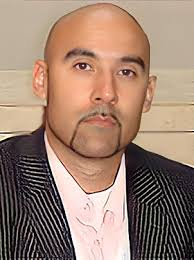
A former two-star US Air Force Major General, the tenth President of Tuskegee and its first ever alumnus President, Dr. Mark Brown was grounded and jovial, but also at times patrician in his mien. In his crimson and gold gown and with his delineated silver goatee beard, he cut a dashing figure on the dais.
The incoming President’s investiture oration was a lyrical encomium to Tuskegee’s heritage, present and vision for the future, enumerating its plethora of past scholarly successes while also signaling the intentionality of his tenure to guide the university on a path to transformation. Dr. Brown expounded the enduring importance - and unwavering commitment - of Tuskegee to service, not just to its students and the local community, but to humanity at large, and asserted that, as a shining beacon of academic excellence with a truly world class faculty, be it in science, engineering, agriculture or aviation, Tuskegee is keen to help enable society’s full human potential.
Listening to President Brown extol the virtues of what he termed “the Tuskegee Renaissance” and reaffirm his commitment to “solving the world’s most complex problems” (the university’s current strapline), it was evident that the Tuskegee spirit of pioneering intellectual enquiry is still very much alive.
In fact, I was reminded of another splendid oration - that of Renaissance Florentine humanist Pico della Mirandola’s seminal Oration On The Dignity of Man (1486). Delivered on another continent and at another, very different time in human history, Pico lit the torch of knowledge and passed it on, so that the darkness of ignorance would dissipate and others could benefit from his illumination - just like Washington did after him.
Mention was also made of Sammy Younge, Jr, the student activist from Tuskegee who was murdered in 1966 for attempting to desegregate “whites only" restrooms - and the first African-American university student to be killed in the US for his support of the Civil Rights movement - an elegiac reminder of the all too human cost of the fight for racial equality in America, and a further reminder, were one ever needed, of the enduring relevance of HBCUs - institutions which were “a refuge for people of color when others questioned our status as human beings.”
Possessing both the wisdom and humility to see himself as a mere custodian of this great office, President Brown concluded by articulating an invaluable, timeless truth: “The enduring name is not Mark Brown; the enduring name is Tuskegee.”
Fervently committed to honoring the power of its past and yet also harnessing the promise of its future, Brown has already set about with gusto writing the next chapter in Tuskegee’s extraordinary story.
With Brown at the helm, and with his leadership imbued with the spirit of the great men of yore who have walked in the same, red clay Alabama soil, Mother Tuskegee will doubtless continue to soar - lifting others to even higher and more impactful heights, and will continue to serve as a launching pad of dreams for generations to come.
© 2025 - Reposted with permission from Lindsay Johns