Contact: Crystal Drake, Office of Communications, Public Relations and Marketing
Dr. Mark Brown, president and CEO, recently led a distinguished delegation to Liberia to reaffirm and expand the university’s century-old relationship with the nation. The delegation included Dr. Thierno Thiam, Provost and Senior Vice President of Academic Affairs, Archbishop Jerry Jones, Dr. Raymon Shange, Assistant Dean and 1890 Extension Administrator and Karl Minter, a member of Tuskegee’s Board of Trustees.
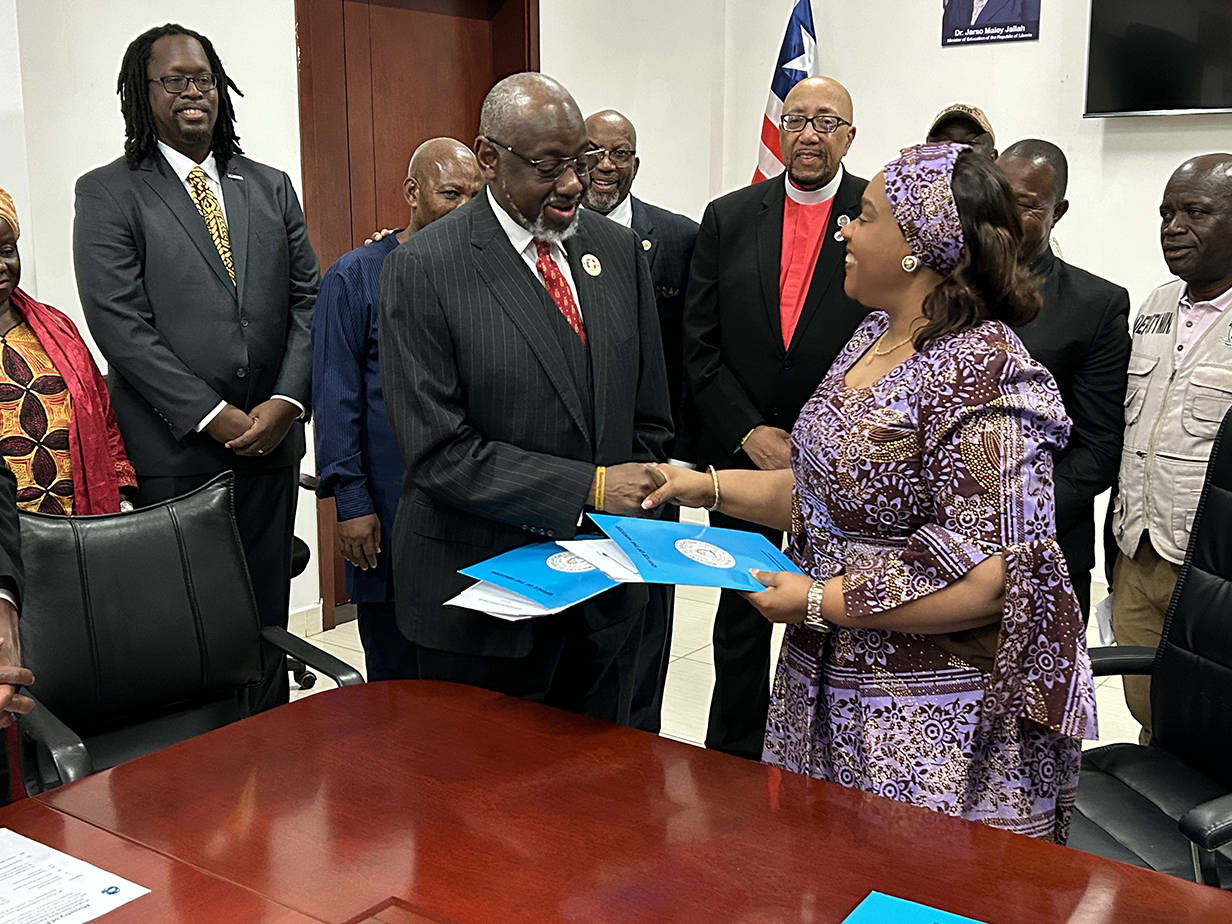
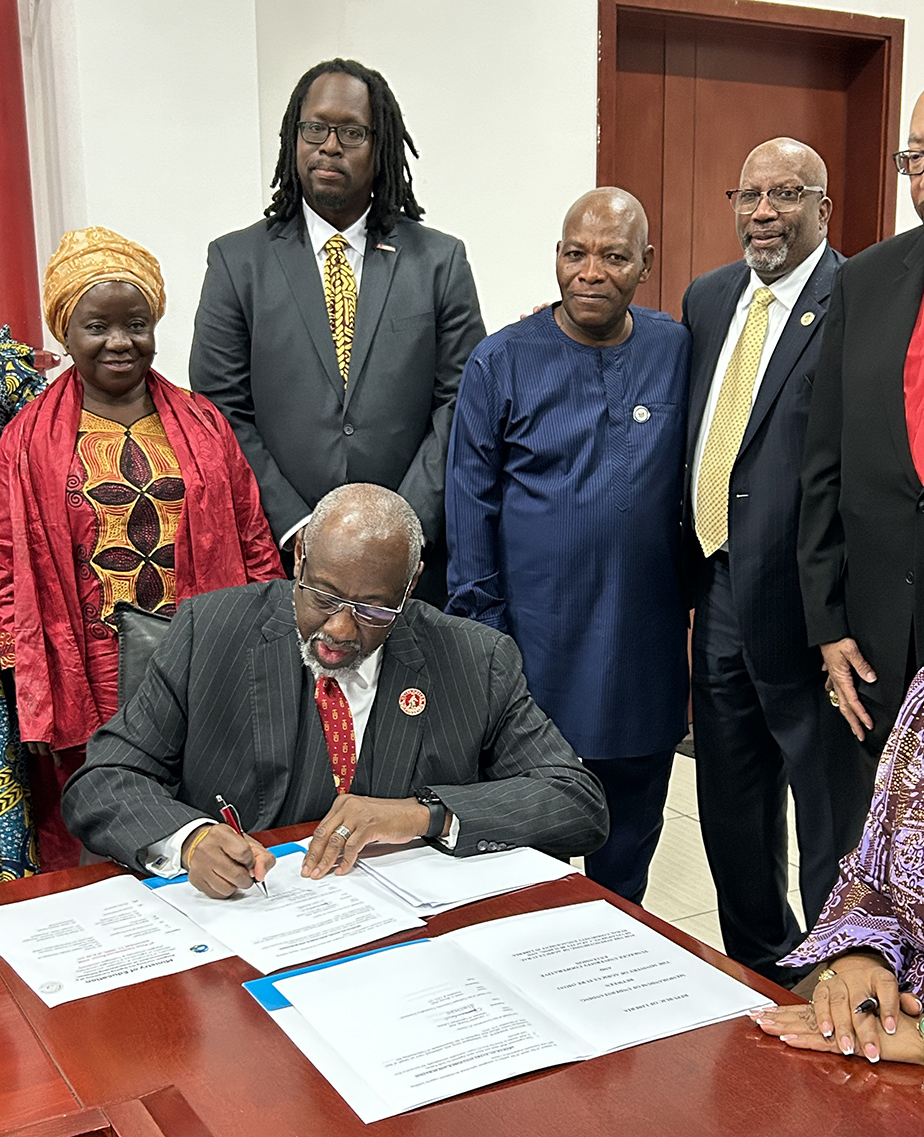
During the visit, the team met with His Excellency President Joseph Nyuma Boakai, Minister of Education Dr. Jarso Maley Jallah, Minister of Agriculture Dr. J. Alexander Nuetah, Dr. Joseph Isaac, President of Margibi University and Dr. Layli Maparyan, President of the University of Liberia to sign a Memorandum of Understanding (MoU) designed to enhance agricultural research, teacher training, and institutional capacity, while also creating opportunities for student exchanges, joint academic programs, and faculty development from institutions under Minister Jallah and Minister Nuetah.
The purpose of the trip aligns with Tuskegee University’s strategic plan to increase international undergraduate enrollment and create pathways for graduate studies leading to the university’s designation as a High Research Based University – R2 Carnegie Classification.
Discussions focused on building pipelines for critical STEM skills—including electrical and mechanical engineering, construction, and aviation sciences—needed both in Liberia and the United States. Trustee Minter’s experience as a retired United Airlines captain was particularly helpful in discussion around that program. Working groups will now form to curate talent, with the goal of welcoming Liberian students as early as Fall 2026.
Dr. Shange toured agricultural sites, including coffee plantations, and explored current research to modernize farming techniques using STEM innovations such as solar technology and drones.
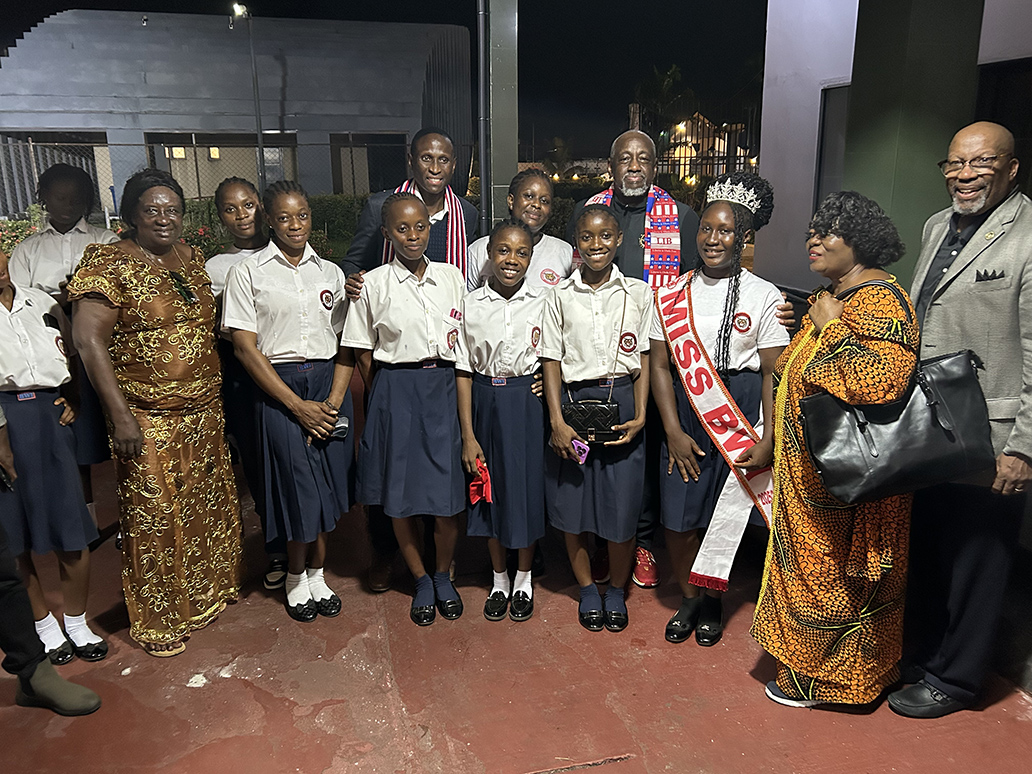
The Tuskegee delegation also visited the historic Booker Washington Institute (BWI), where they were warmly welcomed with traditional Liberian dance and song and honored as honorary alumni.
Tuskegee’s relationship with Liberia has deep roots and this week’s meeting is the culmination of proactive and intentional efforts over the past year to rekindle strong ties.
Tuskegee’s founding principal, Booker T. Washington, is a significant part of Liberian history in part because of his role as a key negotiator in halting the impending annexation of Liberia in 1907 by French, British and German colonial forces, ensuring Liberia’s solvency as an independent nation.

“Tuskegee’s connection to Liberia was further deepened when Liberian President Charles D. B. King visited Tuskegee Institute in 1924,” said Dr. Brown. “He was inspired by its “Head, Heart, Hands” model of vocational education. When BWI was founded, it became a sister institution to Tuskegee that continues to thrive today.”
BWI was Liberia's first agricultural and vocational school and is now a thriving community college. Upon his return to Liberia, he hired Robert R. Taylor, the renowned architect and professor responsible for much of Tuskegee’s campus and the first Black graduate of MIT, to design the campus that became BWI.
“Much like Tuskegee has done for the United States, BWI has been an integral part of the solution to Liberia’s shortages of engineers, architects and agriculturists, and highly-skilled technicians,” said Dr. Thiam. “As the global community continues to evolve, Tuskegee and Liberia are exponentially increasing our global impact to help solve some of the world's most challenging problems.”
“It warmed my heart to witness the global impact of Mother Tuskegee and the desire to do even more today,” said Dr. Brown. The Mother Land and Mother Tuskegee are inseparable!”
© 2025 Tuskegee University