Contact: Crystal Drake, Office of Strategic Communications
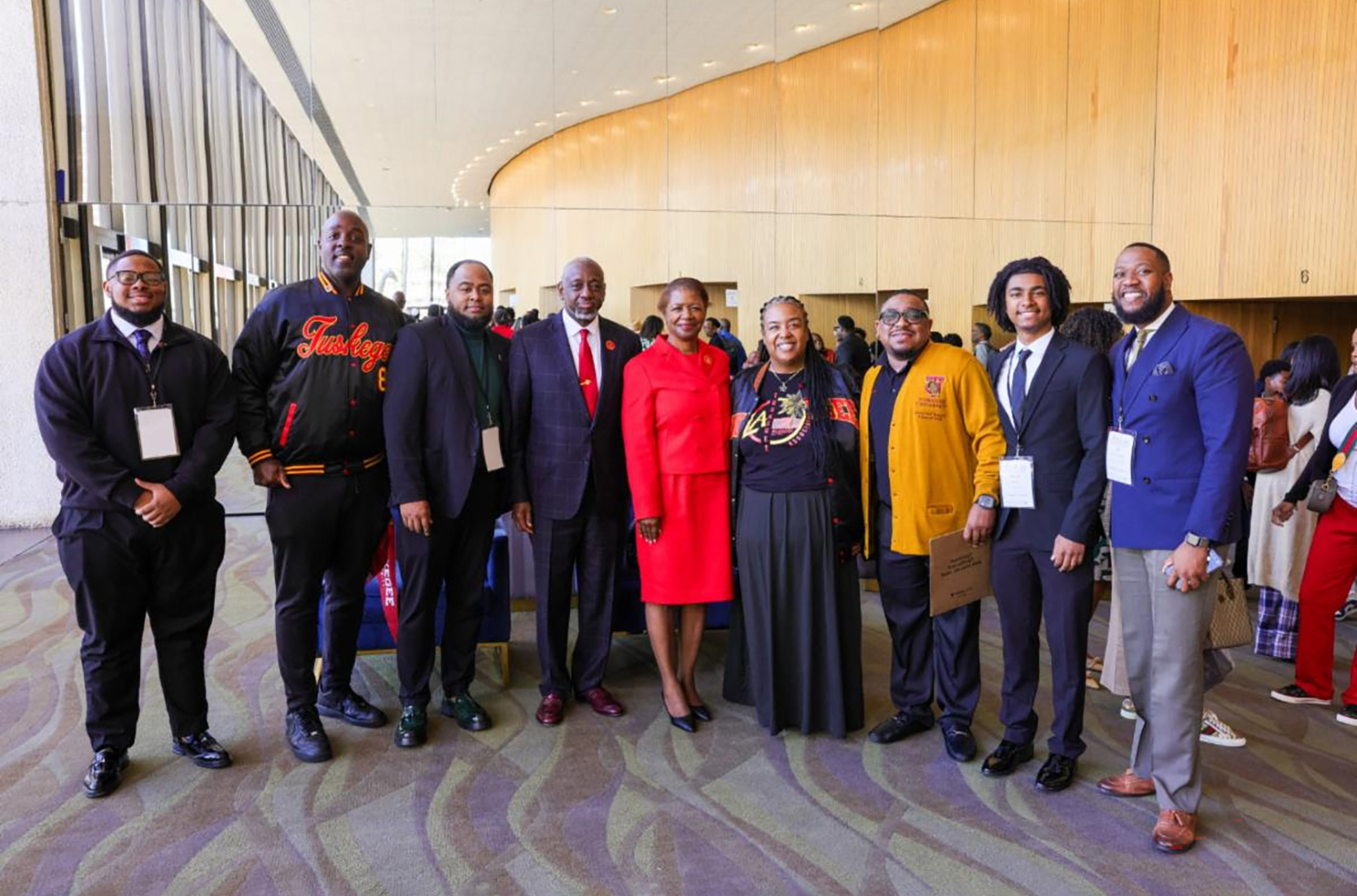
African American Male Education Network & Development (A²MEND) is cutting through the statistics on Black male college completion rates and driving practical solutions – and success. Tuskegee University is in the fight with them as the only HBCU with an A²MEND
chapter on campus.
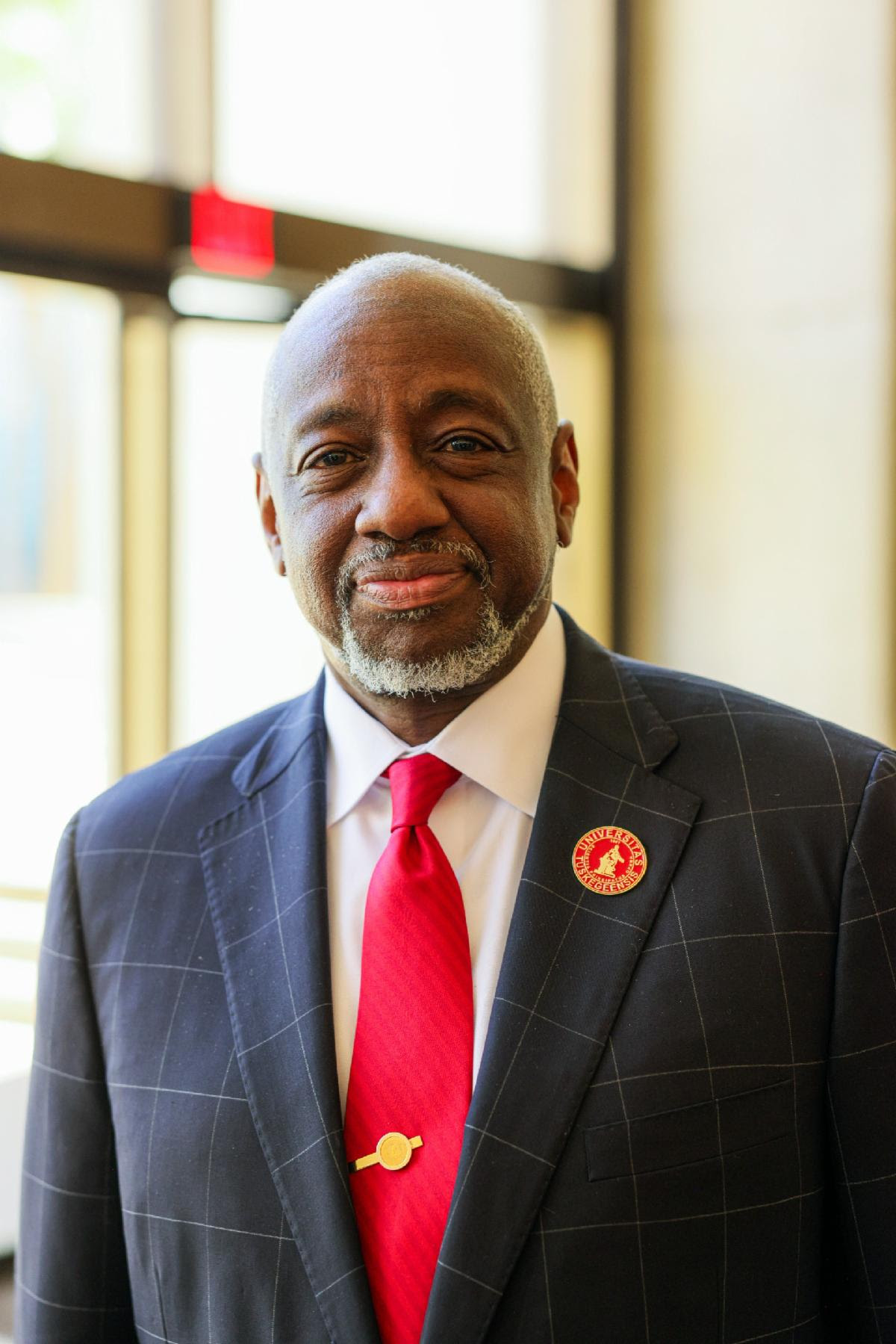
Dr. Mark A. Brown, president and CEO, recently joined thousands of higher education administrators, corporate leaders, workforce development experts and students at the 19
th Annual A²MEND Summit - "Sacred Work: (Re)membering, (Re)storing, (Re)birthing Black Men and Boys” – as the organization continues to cultivate black male success on college campuses and strengthen healthy support systems for them in the community.
The facts are dire:
- In 2022, among 18–24‑year‑olds, college enrollment rates were 41% for white youth vs. 36% for Black youth; men of all races enroll and finish at lower rates than women, with the widest gender gaps among Black and Hispanic students.
- Black students have the lowest completion rates among major racial/ethnic groups and borrow at the highest rates for college. (≈50% of Black undergrads borrow).
- Tuskegee University recently hit a 10-year enrollment high at 3366 for the 2024-2025 academic year. But a deeper look at recent trends show that a gender gap in that enrollment is wide. For the current year, 61% of Tuskegee students are female, with a 39% total for male students.
Through its student charters primarily at community colleges, A²MEND provides academic resources, mentorship opportunities and professional development to help students excel in college – including moving on to a four-year college – in preparation for a successful future.
In the end, too few community‑college starters make the leap to a bachelor’s degree—about one in three transfers, and just one in six finishes in six years—with Black men facing steeper cliffs.
But research indicates what levers to pull: get students through gateway English and math early, lock in consistent advising, keep students off academic probation – and build cultural communities like A²MEND is doing across the country – the odds improve exponentially. Suddenly you change the odds.
Since its founding in 2006, A²MEND has mentored hundreds of young men, awarded over a million dollars in scholarships, and built dozens of student charters across the country.
“
A²MEND is not admiring the problem,” said Dr. Brown. “These dedicated leaders are addressing the multi-layered root causes head-on and moving beyond statistics to drive strategy,” said Dr. Brown.
“Much the same way our founding principal, Booker T. Washington asserted that investing in Tuskegee education gave Black people practical skills and built self-reliance, which in turn built economic advancement and, ultimately the peace and power of true community support, I know that young Black men can find that at Tuskegee University today.”
He knows because it happened to him.
Dr. Brown began his remarks about his own beginnings. Describing himself as average at best in school, he shared the details of a childhood that, though characterized by many of the traditional indicators of poverty, was rich in emotional support, much of which was derived from his wise grandmother. In what would become a decision that changed the trajectory of his life, she sent him to Tuskegee because she knew through the cultural grapevine that Tuskegee was a place that would nurture her grandson’s academic and psychological development.
He is now the tenth president of Tuskegee University, the first alumnus in the role, who retired as a two-star major general from a 32-year career in the U.S. Air Force, served as the chief operating officer of the U.S. Department of Education’s Office of Federal Student Aid and, before returning to Tuskegee as president, served as president and chief executive officer of the Student Freedom Initiative, an organization created to eliminate student debt by billionaire philanthropist Robert F. Smith.
His point to the group was that past isn’t necessarily prologue. Whatever their stations in life, Dr. Brown encouraged young Black men – and the families who support them – to consider a college education, either as a continuation or a reset, one of the best pathways to their success.
He commended A²MEND for asking the right questions and supporting the answers with facts, especially that college education remains one of the most proven indicators of future economic mobility and generational wealth.
“You are moving people, young men, to their true destiny,” said Dr. Brown.
The two-day summit included a variety of connection points for participants from professional development and career fair opportunities, to candid discussions around Black male mental health. The gathering also made space for important conversations around healthy and mutually supportive relationships between Black men and women, all in support of a A²MEND’s commitment to create supportive academic environments where all students can thrive.
© 2026 Tuskegee University