Contact: Crystal Drake, Office of Strategic Communications
Tuskegee University welcomed leaders from Interfaith America this week as part of the university’s ongoing participation in the organization’s national Prejudice to Pluralism Campus Cohort.
Tuskegee University is one of nine institutions selected nationally to participate in 2026-27 cohort. The initiative brings together university leaders from across the country to address antisemitism, Islamophobia, and other forms of prejudice while strengthening cooperation and understanding across differences on college campuses.
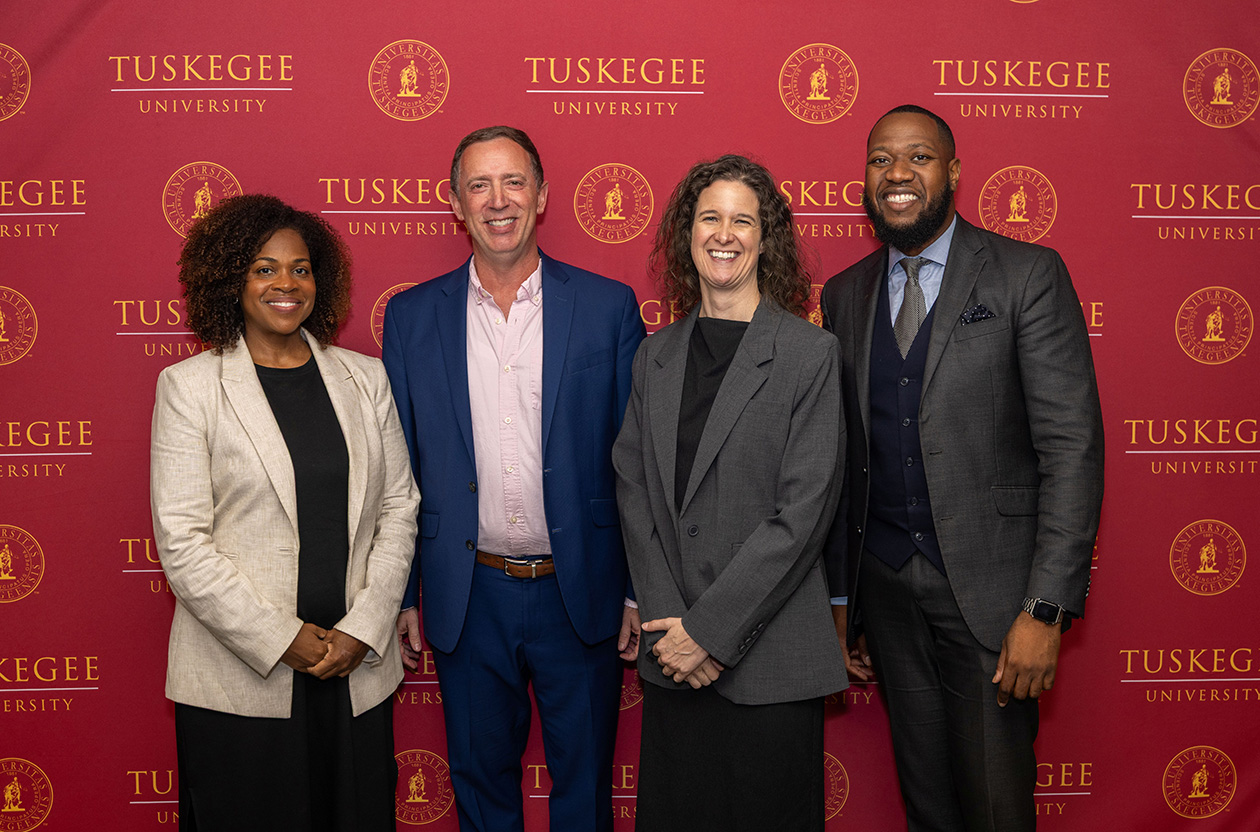
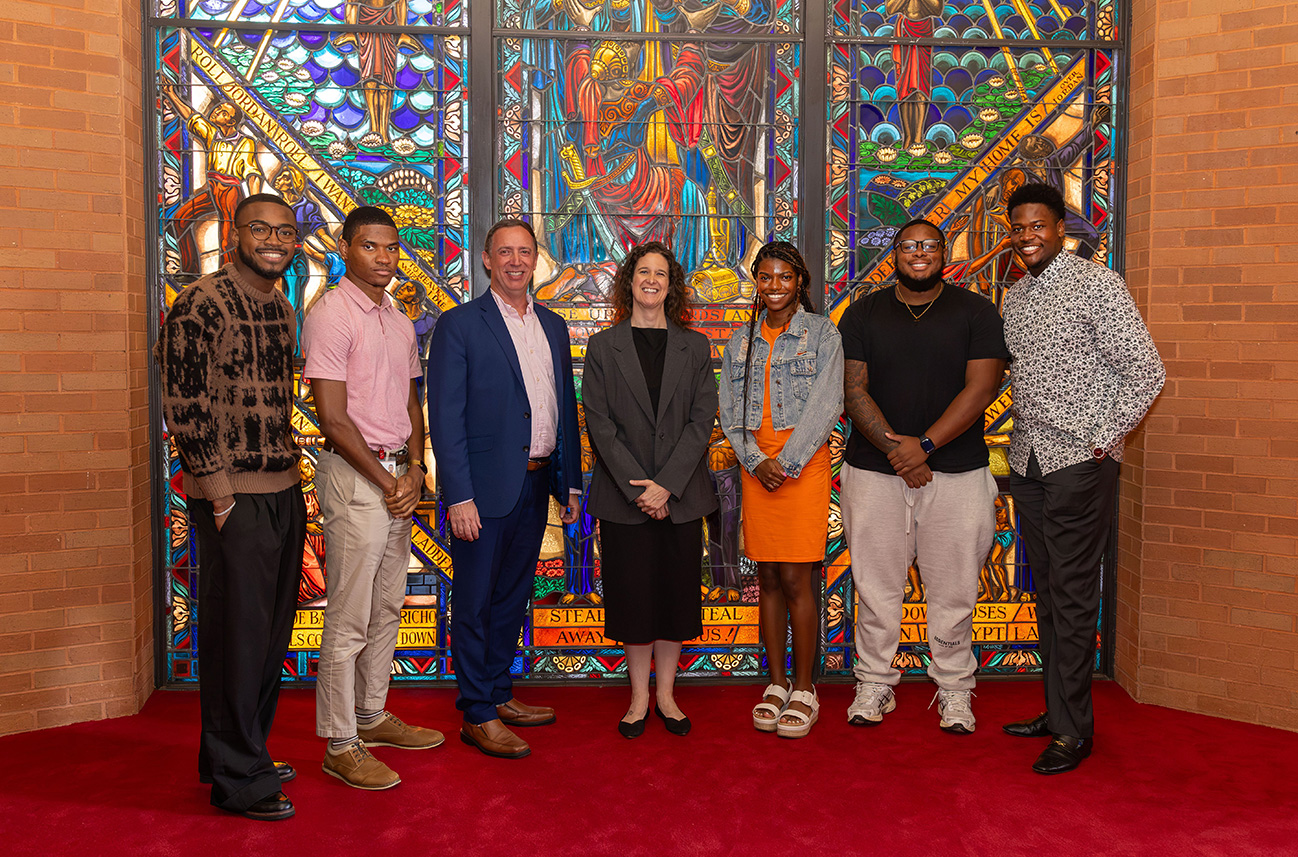
Dr. Todd Green, Senior Director of Campus Partnerships, and Susan Haarman, Director of Campus Partnerships, met with university leadership and students to discuss how intentional dialogue around faith, identity, and understanding are an important part of the student experience that can benefit the global human experience.
“The oldest of wars are steeped in ignorance – meaning the truest definition of that word, a lack of knowledge – which breeds fear,” said Dr. Mark A. Brown, president and CEO during the meeting. “One of the richest gifts of the university experience is that it gives students proximity to people who are their peers in many ways but who also have many lived experiences very different from their own, including those involving faith journeys. It takes them out of their neighborhoods, out of their zip codes to help them truly become world citizens.”
Interfaith America’s mission is rooted in equipping leaders to create institutional cultures where people “respect, relate, and cooperate across difference.” For more than two decades, the organization has partnered with hundreds of colleges and universities across the nation.
The relationship with the organization has been championed by Rev. Dr. Cecil Duffie, Dean of the Chapel with support from Dr. Rolundus R. Rice, Chief Operating Officer and Vice President for Student Affairs and the Student Affairs team. Earlier this year, the Tuskegee team participated in the cohort’s inaugural convening in Chicago and received a $20,000 grant to support efforts that promote religious pluralism, engagement, and belonging on campus.
“We are excited to bring Tuskegee into the Prejudice to Pluralism conversation. We are building curiosity, connection & community through our Chapel and this initiative will be a part of moving that forward,” Duffie said. “Our students bring a wealth of energy and insight into this work as they grow as leaders ready to engage in thoughtful and constructive dialogue on creating a world where people from different faith traditions, cultural backgrounds, and worldviews feel welcomed, respected, and valued.”
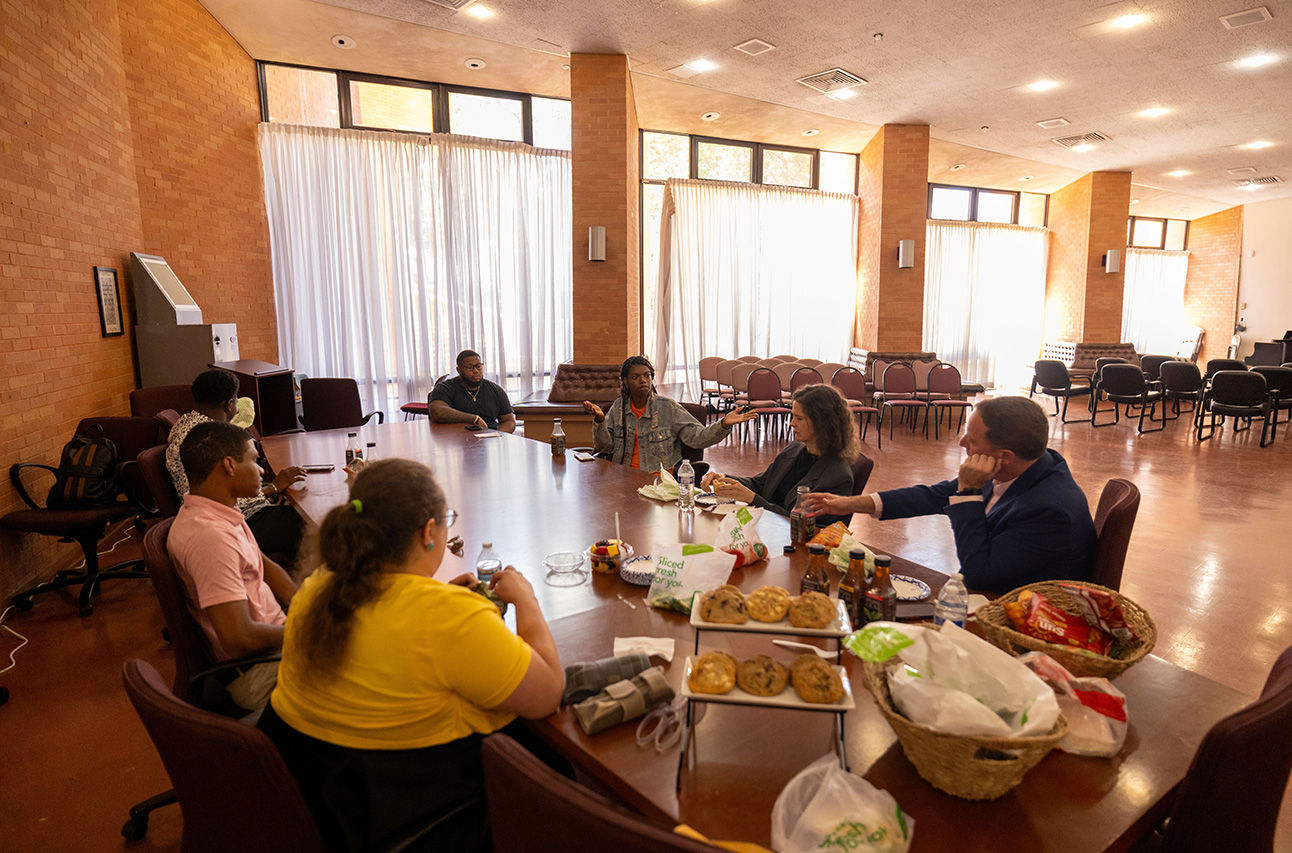
Following the leadership meeting, Dr. Green and Dr. Haarman participated in a lunch-and-learn roundtable with students, providing an opportunity for open dialogue about how the principles of pluralism can be applied in college life.
The conversation aligned closely with the evolving vision of the University Chapel under the leadership of Dean Duffie. While maintaining its spiritual foundation, the chapel has increasingly become a place for community-building, dialogue, learning, and connection among students from all backgrounds and for the wider Tuskegee, Alabama community.
Students participating in the discussion described the Chapel as a welcoming space that challenges traditional assumptions about what a campus chapel can be.
“Chapel isn’t just for worship at Tuskegee,” said Kennedi Maxwell, a senior and president of the Student Government Association, citing a variety of student-led activities and programs hosted in the space. She pointed to Dean Duffie’s focus on creating an environment where people of all faiths, as well as those who do not identify with a religious tradition, feel safe and included.
“It is rewiring the mindset,” she said. “Different isn’t bad and it’s okay to have those differences.”
The roundtable highlighted how students are finding ways to build community while embracing differences and learning from one another.
Malachi Walker, a senior Business major, shared that his personal decision to pursue a career in Christian ministry complements, rather than conflicts with, the principles of pluralism.
“It’s about having respectful conversations around why I believe what I believe,” Walker said. “Do we have space to nurture and express questions?”
At Tuskegee University, he believes the answer is yes.
© 2026 Tuskegee University