Contact: Crystal Drake, Office of Strategic Communications
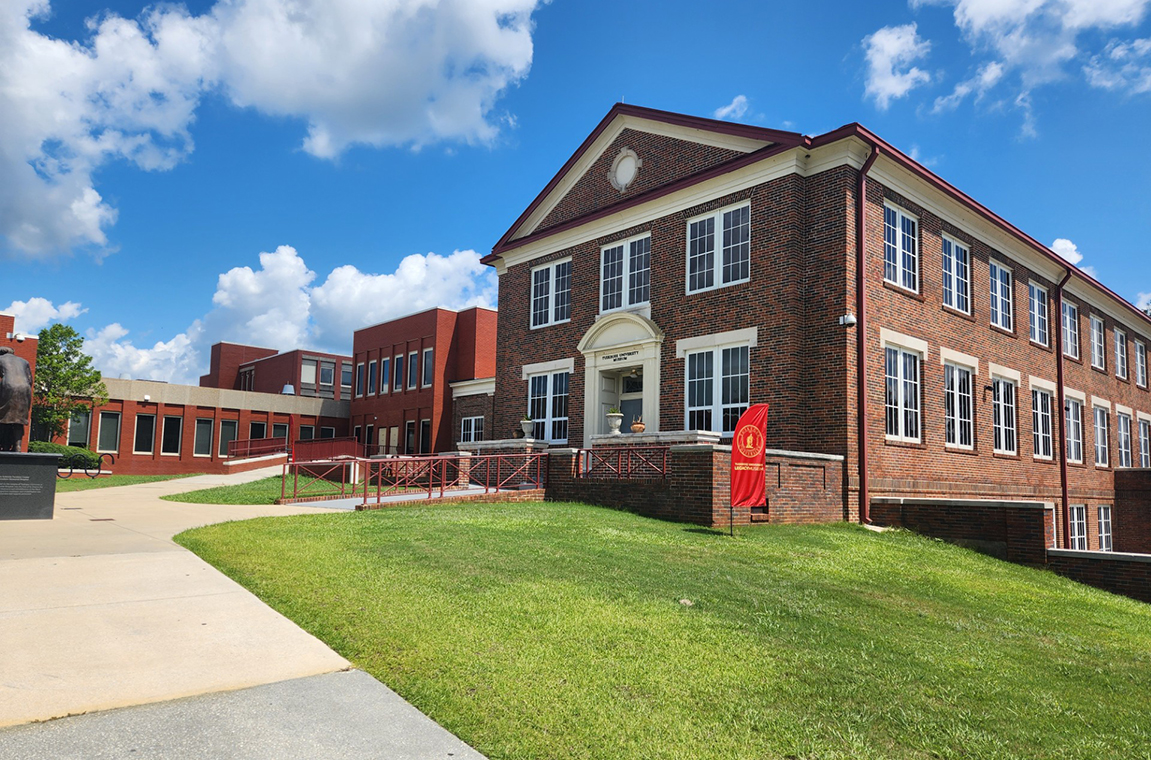
Tuskegee’s Library Services, University Archives, and Legacy Museum have been awarded three highly competitive national grants totaling $500,000. The funding will expand access to some of the university’s most significant historical and cultural collections, while making valuable resources more accessible to students, researchers, alumni, and all seeking to learn well into the future.
The grants include:
- Institute of Museum and Library Services (IMLS) Phase 2: Expanding Access to Archival and Museum Collections – $100,000
- IMLS From Pilot to Permanent: Bridging Support for the History and Culture Access Consortium – $100,000
- Council on Library and Information Resources (CLIR) Grant: Thomas Monroe Campbell Sr.: Digitizing the Legacy of Tuskegee’s Agricultural Extension Service – $300,000
Together, these grants will enhance preservation infrastructure, create student learning opportunities, advance digitization efforts, and ensure broader public access to materials that represent the impact of Tuskegee University across disciplines and generations.
“These awards affirm the national significance of Tuskegee University’s collections and the outstanding work being done every day by our Library Services, University Archives, and Legacy Museum teams, including student interns who are gaining real-world archival experience,” said Dr. Mark A. Brown, president and CEO of Tuskegee University. “The grants help ensure that the stories, scholarship, cultural perseverance, and national heritage preserved at Tuskegee remain accessible for generations to come.”
The first award, IMLS Phase 2: Expanding Access to Archival and Museum Collections, builds upon a previous grant that improved storage conditions for museum collections through the installation of compact shelving and specialized painting racks. The new funding will allow the university to expand these improvements across both the Archives and the Legacy Museum.
“Phase One allowed us to install compact shelving in the museum and create appropriate storage for important works of art,” said LaStarsha McGarity, Conservator and Co-Director of the Legacy Museum. “Phase Two will expand those improvements into both the Archives and Museum, increasing our storage capacity by more than 400 percent while making collections more accessible and easier for staff to manage.”
The project will replace traditional static shelving with modern compact shelving systems designed to maximize space, improve preservation conditions, and streamline collection retrieval. The grant will also support student work-study positions, giving students valuable hands-on experience in archival processing, collection management, digitization, and preservation practices.
The second award, From Pilot to Permanent: Bridging Support for the History and Culture Access Consortium, will sustain digitization efforts launched through a successful five-year collaboration between Historically Black Colleges and Universities and the Smithsonian Institution. Led by Dr. Constance Caddell, Director of Library Services, Archives, and Museums, the project will ensure that critical digitization and metadata creation work continues after the original consortium concludes.
“We did not want the work to stop when the pilot program ended,” Dr. Caddell said. “This grant allows us to continue the workflows, digitization practices, and access initiatives that have already proven successful.”
Funding will support a digital humanities archivist position, consultants, and student interns who will assist in digitizing materials, developing metadata, and expanding online access to collections through digital platforms. The initiative will help transform a successful pilot project into a sustainable long-term program.
The largest award, a $300,000 grant from the Council on Library and Information Resources (CLIR), will fund a three-year project focused on digitizing and preserving the legacy of Thomas Monroe Campbell Sr., the nation’s first African American agricultural extension agent. Campbell’s innovative community outreach supported the work of farmers throughout the South, particularly by helping them adopt modern agricultural practices.
While these materials have been preserved, their accessibility has been limited.
“This project increases the visibility and discoverability of a collection that is nationally important,” Dr. Caddell said. “Researchers around the world will be able to learn more about this trailblazer and the broader history of Tuskegee’s Agricultural Extension Service.”
Tuskegee continues to affirm its national leadership in preserving and interpreting history and was chosen as one of five HBCUs to share collections for
At the Vanguard: Making and Saving History at HBCUs, a national state-of-the-art touring series organized by the Smithsonian National Museum of African American History and Culture (NMAAHC). The exhibition is scheduled to arrive on Tuskegee’s campus in 2028.
Tuskegee University’s archival holdings rank among the most significant repositories documenting African American history and achievement. Library Services houses nearly 300,000 volumes of books and journals, 30,000 government documents, more than 600 archival collections, and approximately 200 databases and electronic resources.
The Legacy Museum contains more than 2,000 artifacts and offers visitors opportunities to explore art, science, ethics, and history through permanent and rotating exhibitions.
Dr. Marvin Byrd, Digital Humanities Program Manager, noted that researchers are often surprised by the depth and breadth of materials preserved at Tuskegee.
“We are one of the largest Black archives in the country,” Byrd said. “Researchers frequently discover materials they never expected to find, whether they are studying agriculture, education, philanthropy, civil rights, or the lives of influential figures connected to Tuskegee.”
With this funding, Tuskegee will continue to connect and translate its legacy into the future to create more informed outcomes for all people.
© 2026 Tuskegee University