Contact: Crystal Drake, Office of Strategic Communications
Tuskegee University continues to deepen its cybersecurity research capabilities with a $449,999 research grant recently earned from the U.S. National Science Foundation (NSF) to support a three-year research and education initiative focused on integrating artificial intelligence (AI) to enhance the security, resilience, and efficiency of cloud-based cyber-physical systems (CBCPS).
“Tuskegee’s founding ethos – that education should be attained to empower people with skills that solve complex problems and improve the communities around them – is reflected in what this NSF funding will empower Tuskegee scholars to accomplish,” said Dr. Mark A. Brown, president and CEO about the project entitled “Research Initiation Award: Integrating AI for Resilient Cloud-Based Cyber-Physical Systems.”
Combining cloud computing with cyber-physical systems gives the world more computing power, storage, scalability, and real-time data processing, but with that comes increased threats to personal and organizational security.
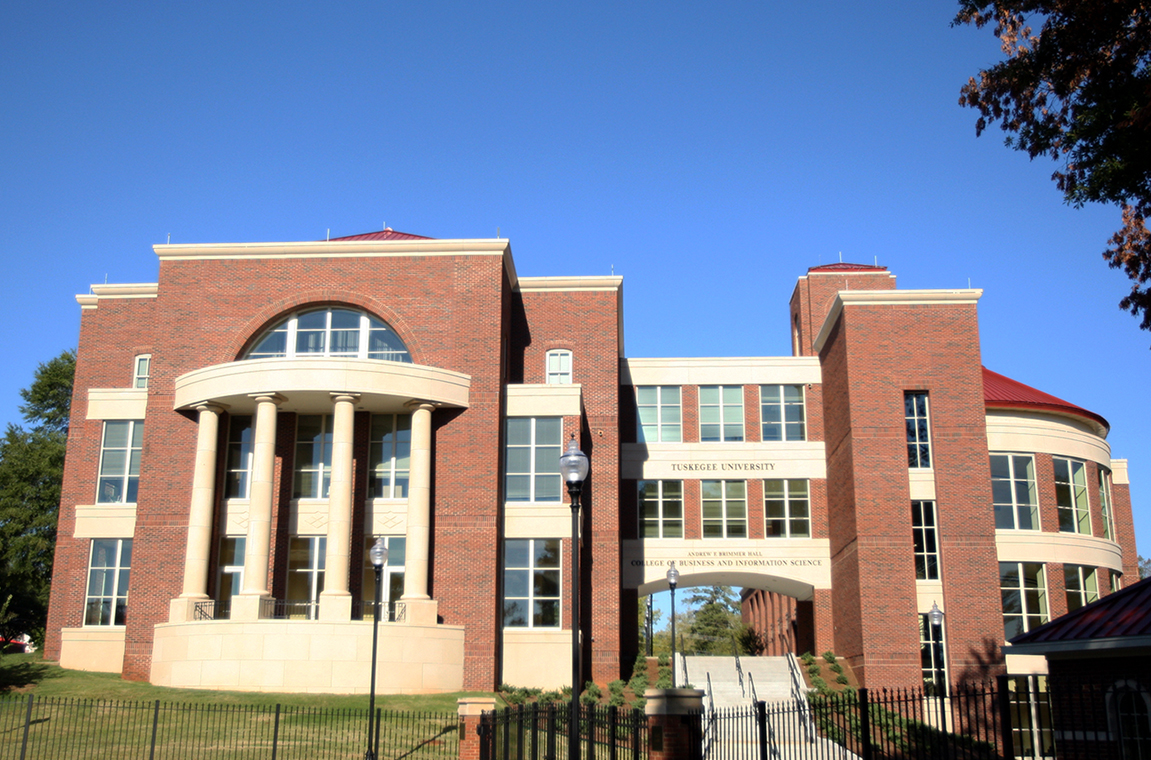
“You see those combinations every day in smart homes, robotics used in surgery and in manufacturing, and the energy grids that power our communities,” said Dr. Fan Wu, Chair of the Computer Science department of the Andrew F. Brimmer College of Business and Information Science.
“But connecting physical devices, communication networks, and cloud systems also creates cybersecurity risks. That risk continues to increase, and our research will investigate how AI can pre-empt, defend against, and stop cyberattacks that can interrupt important services, endanger public safety, and impact critical infrastructure.”
The grant also moves Tuskegee closer to its goal of reaching R2 and eventually R1 designation. R1 and R2 universities represent top tiers of research-intensive doctoral institutions in the US, as defined by the Carnegie Classification System. Tuskegee expects to qualify for R2 next year, with sights set on moving swiftly to the higher ranking of R1. These rankings increase research funding, accelerate faculty hiring, and provide students with more opportunities for state-of-the art training.
Dr. Mohammad Rahman, Assistant Professor of Computer Science at Tuskegee University, serves as the project’s Principal Investigator. The project will strengthen Tuskegee University’s research capacity around artificial intelligence, cybersecurity, cloud computing, and cyber-physical systems while fostering multidisciplinary research and collaboration.
In addition to advancing research, the project supports Tuskegee’s Renaissance Era focus on equipping students to compete and win in a global economy. According to the Bureau of Labor and Statistics, employment of information security roles analysts is projected to grow 21 percent from 2025 to 2035, much faster than the average for all occupations.
Tuskegee introduced the Ph.D. program in Information Systems and Computer Security (ISCS) last spring and added courses this year with specialized tracks in Cybersecurity and Data Science.
"This NSF grant will significantly enhance our ability to provide students with access to state-of-the-art research opportunities that positions them to become leaders in cybersecurity and that further positions Tuskegee as a leader in solving the world’s most complex problems,” said Dr. Wu.
© 2026 Tuskegee University