Contact: Crystal Drake, Office of Strategic Communications
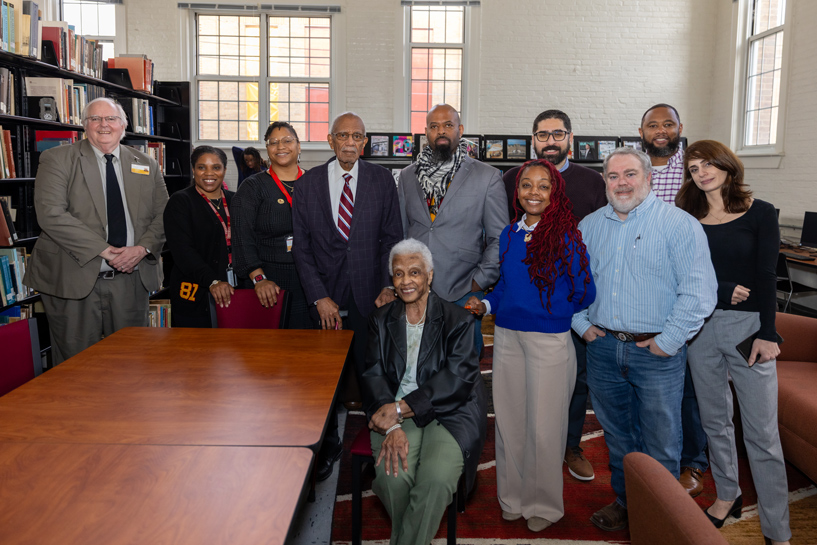
Tuskegee University celebrated the extraordinary life, career, and contributions of renowned architect Major L. Holland, FAIA, with the naming and dedication of the Major L. Holland Library within the Robert R. Taylor School of Architecture & Construction Science (TSACS).
The ceremony brought together university leaders, faculty, students, alumni, community members, and members of the Holland family to honor a native son whose work has left a lasting imprint on Tuskegee University, the architecture profession, and communities across the nation.
The dedication recognized Holland as a distinguished architect, educator, mentor, and advocate whose influence spans more than six decades, including 35 years as professor at Tuskegee. The library in TSACS’ Willcox Hall C stands as a permanent tribute to a man whose professional achievements and commitment to service continue to inspire future generations of architects and designers.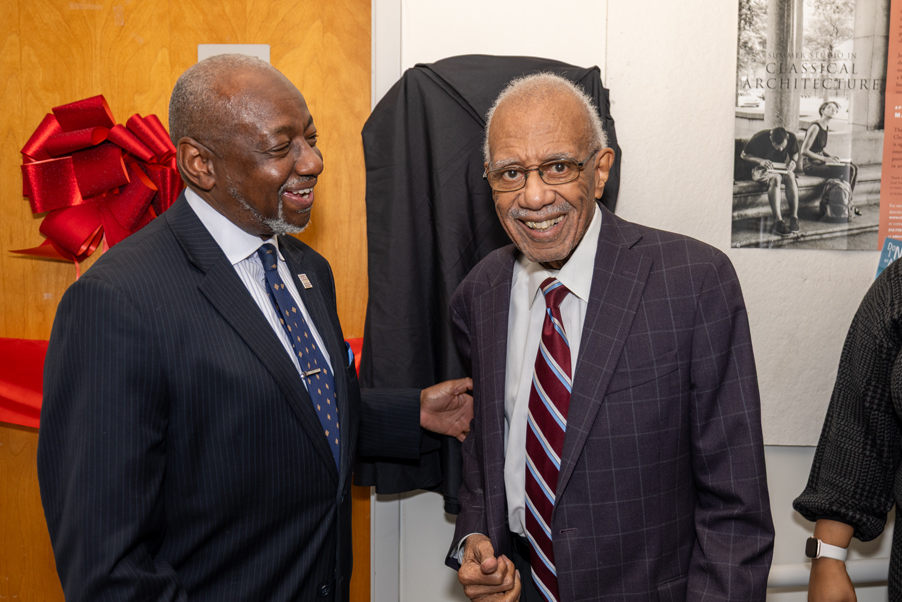
“Thank you for offering your brilliance to the world,” said Dr. Mark A. Brown, president and CEO of Tuskegee University.
Dr. Brown reflected on Holland’s beginnings in Tuskegee, where he was born in 1941, during a time when the brilliance of a Black man in the segregated South was a flaming rejection of a society structured to extinguish it.
Holland earned his Bachelor of Architecture degree from Howard University in 1964. Following graduation, he built an impressive professional portfolio, working with leading architects and firms, including Lewis Fry in Washington, D.C., and renowned architect Paul Rudolph in New York.
Holland’s career achievements led to his elevation as a Fellow of the American Institute of Architects (FAIA), one of the profession’s highest honors. The distinction is awarded to architects who have made significant contributions through design excellence, education, leadership, or public service. Fewer than three percent of AIA members receive the honor.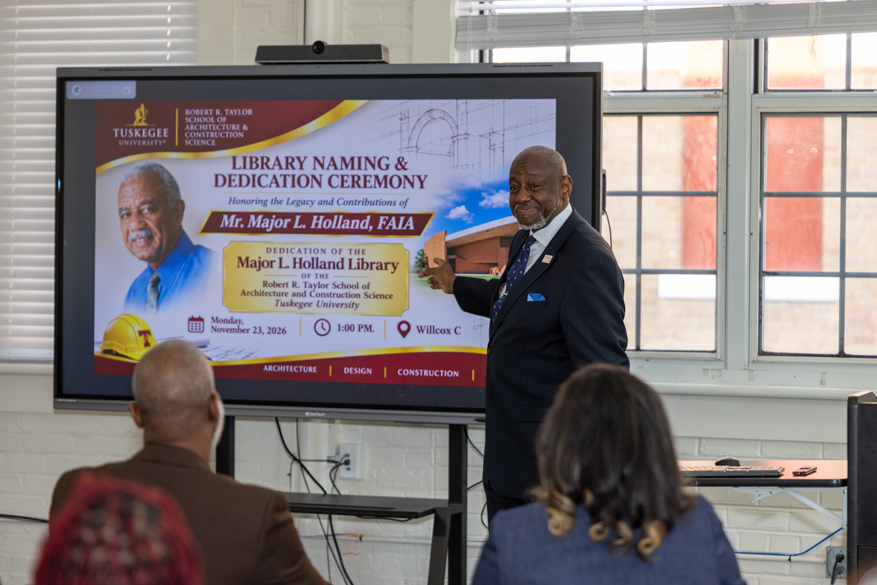
“One of the best ways to understand a place is to look at the people who came out of it,” Brown said. “This is a very special place where people knew they could learn, do, and be excellent. If they didn’t have it, they would build it, and that’s exactly what Mr. Holland did when he came home in 1968 to help rebuild the University Chapel.”
The chapel, one of the university’s most recognizable architectural landmarks, remains among Holland’s most celebrated projects. His impact on the community extends beyond campus as well. Holland also led the development of the Macon County Municipal Complex, helping shape the civic center of Tuskegee.
“We honor a man who has contributed so much to this university and to this community,” said Dr. Catherine Armwood, dean of TSACS. “His work is a living legacy of creating spaces that continue to encourage future generations to discover, imagine and create.”
Part of Holland’s legacy, his former student, Dr. Kwesi Daniels, TSACS Associate Professor and Architecture Department Head, took the opportunity to thank his teacher.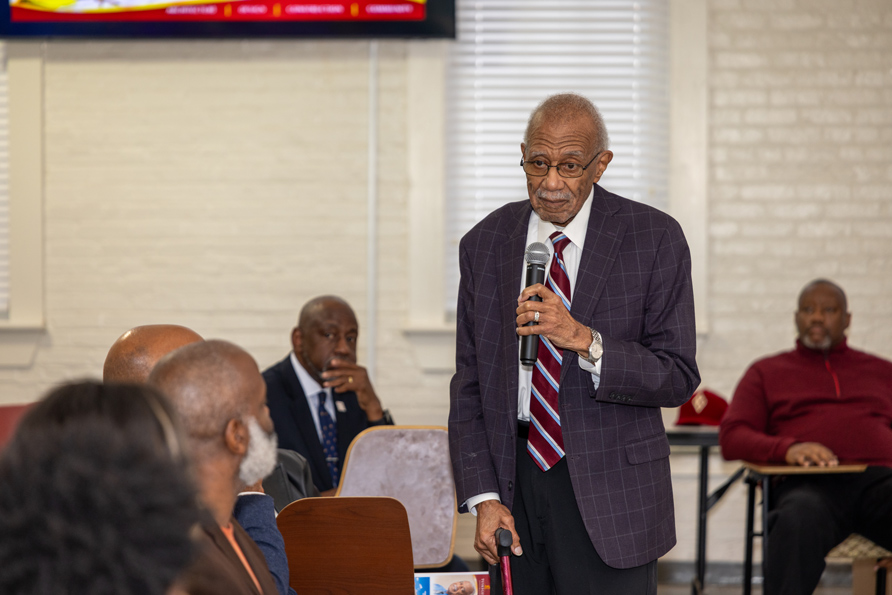
“It is an auspicious moment to honor a former professor,” Dr. Daniels said, visibly moved by memories of his mentor. “Thank you for the service you gave, and the path you laid.”
Dr. Daniels also noted that Holland’s influence continues in the present tense.
“Your name rings out all over the country,” he said, recalling conversations about Holland during a recent visit to Washington, D.C., where the exhibition “Tuskegee Chapel: Paul Rudolph x Fry & Welch” is on display at the National Building Museum. The exhibition, which Dr. Daniels helped to curate, explores the design, construction, and cultural significance of Tuskegee University’s historic chapel, highlighting the project’s enduring importance in American architectural history.
Dr. Brown and Holland then cut the ribbon after admiring the custom sign placed at the door, meticulously designed and crafted in-house with white oak and trimmed by Spanish mahogany by Thomas Kaufmann, TSACS Library Coordinator, and Jeremiah Bryan the Construction Lab Coordinator.
Following the ceremony, Holland said, even now, he prefers to keep his hands busy doing what he loves. He shared his philosophy on the true mission of architecture, emphasizing that the discipline extends far beyond technical calculations and building design.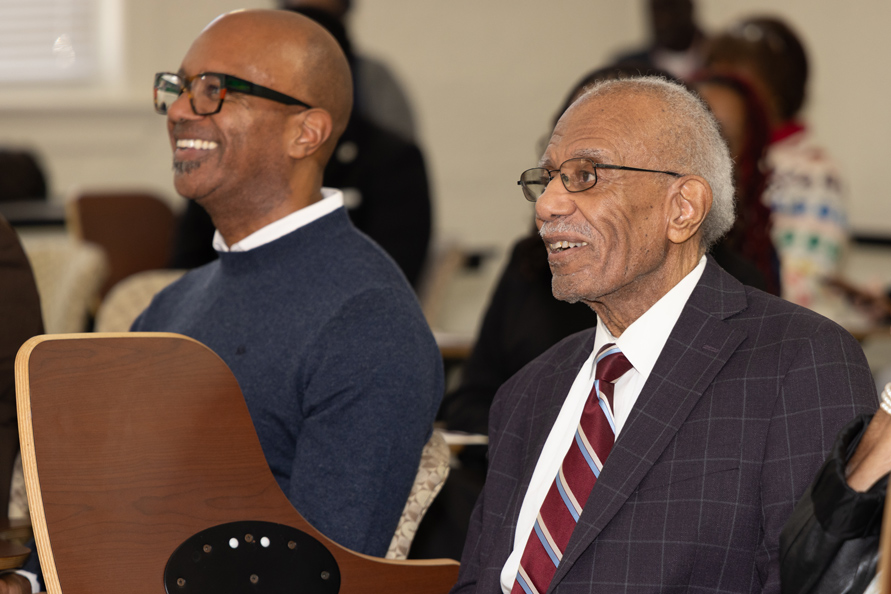
“People need both physical and psychological space,” Holland said. “People are formed by their environment.”
Returning to Tuskegee’s campus stirred deep reflections about the institution’s history and mission.
“This is a magnificent testament to history,” he said. “You see Booker T. Washington’s theory: learn it, then do it. It is theory brought to life, not just mechanics. Adjusting space to meet the needs of people. That is what architecture is.”
© 2026 Tuskegee University